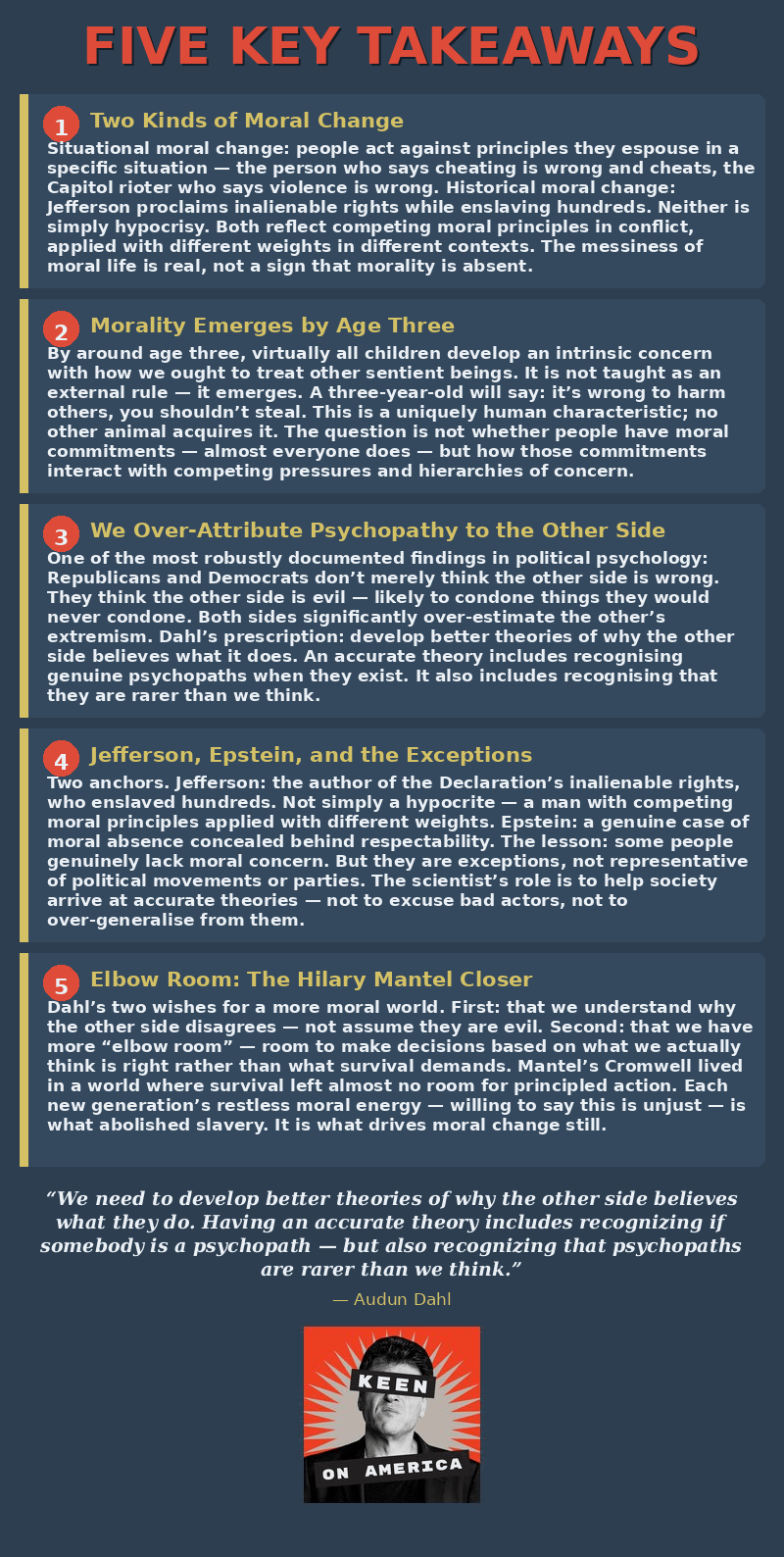
“We need to develop better theories of why the other side believes what they do. Having an accurate theory includes recognizing if somebody is a psychopath — but also recognizing that psychopaths are rarer than we think.” — Audun Dahl
If you’re not a liberal at twenty, you have no heart; if you’re not a conservative at forty, you have no head. While this sounds like an annoying cliché (especially to people under forty), it does recognize that our moral views change. But, as the Cornell psychologist Audun Dahl argues in his new book Between Fixed and Fickle: Why Our Moral Views Keep Changing, the most interesting question is why our moral principles always seem in flux. Why people who say cheating is wrong cheat. Why people who say violence is wrong turn a blind moral eye to their own insurrections.
Dahl is a psychologist, not a moralist. He is not interested in what we should believe, but in what we think we believe. His central finding is that human morality is neither fixed nor fickle. People change their moral views when they believe they have good reasons to — reasons they can, indeed, articulate. The problem isn’t hypocrisy per se. It’s that we struggle to understand why the other side believes what it does. In morally polarised societies like contemporary America, we over-attribute psychopathy to political opponents. Most Republicans and most Democrats do have genuine moral commitments. But they are just different principles, applied to parallel moral hierarchies. Rather than morality perhaps, we need more empathy. Don’t judge. Understand.