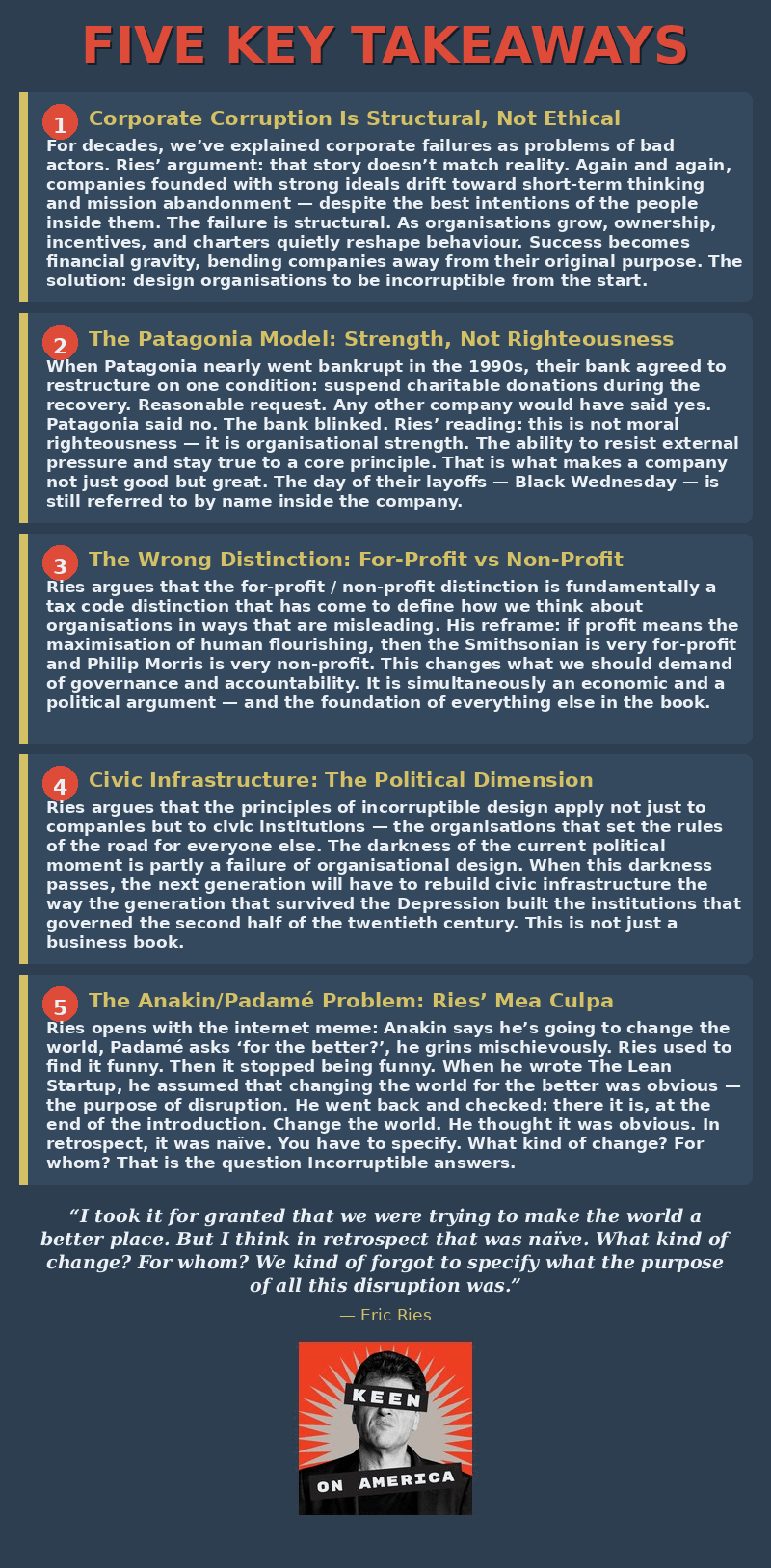
“I took it for granted that we were trying to make the world a better place. But I think in retrospect that was naïve. What kind of change? For whom? We kind of forgot to specify what the purpose of all this disruption was.” — Eric Ries
In 2011, Eric Ries published The Lean Startup, a book that reflected the optimistic zeitgeist about disruptive Silicon Valley companies. Fifteen years later, in Incorruptible: Why Good Companies Go Bad and How Great Companies Stay Great, Ries reflects today’s totally different zeitgeist about the value of companies inside and outside Silicon Valley.
Back in 2011, everybody loved tech. Ries, creator of the Lean Startup method and founder of the Long-Term Stock Exchange, admits he was naïve in his positive view of disruptive corporations. In Incorruptible, Ries argues that corporate corruption is structural, rather than a problem of bad actors. As organisations grow (ie: become more disruptive), the systems that govern them — ownership, incentives, charters, accountability — quietly reshape behaviour. Success itself becomes a form of financial gravity, diverting companies away from their original purpose.
Ries proposes that we design organisations to be incorruptible from the beginning. It’s the Patagonia model. When the outdoor clothing company almost went bankrupt in the 1990s, their bank agreed to restructure their loans if they would suspend their charitable donations for a couple of years. No deal, the CEO said. The bank blinked and Patagonia remained Patagonia. Now, Ries argues, every corporation should emulate Patagonia and become the incorruptible corporation. Like Eric Ries, everyone in and out of Silicon Valley needs to get beyond the lean startup.